Pelvic organ prolapse

Pelvic organ prolapse is the downward movement of one or more walls of the vagina. This may be the front (anterior), back (posterior) or the uterus (womb).

Pelvic organ prolapse can affect anyone, but around 5-10% of adult women experience symptoms of pelvic organ prolapse.

What are the symptoms of pelvic organ prolapse?

Women with pelvic organ prolapse often notice sensations in the vagina and perineum, such as:

  • A feeling of heaviness or pressure
  • The sensation that something is “coming down”
  • Feeling a lump or ball in the vagina
  • Dragging sensations

Other symptoms can affect the bladder and bowel. These may be caused by the prolapse, but they can also occur for other reasons. These include:

  • Not being able to fully empty the bladder or bowel
  • Difficulty starting the flow of urine or needing to change positions
  • Leaking urine when standing up from the toilet
  • Standing up and leaking urine when getting up off the toilet
  • Stress urinary incontinence – when urine leaks out at times when your bladder is under pressure; for example, when you cough or laugh
  • Bladder or bowel urgency
  • Overactive bladder symptoms
  • Bladder frequency

What causes pelvic organ prolapse?

Some common causes include:

  • Pregnancy and childbirth, especially vaginal delivery
  • The weight of a growing baby, putting pressure on pelvic organs and pelvic floor muscles
  • Hormone changes during pregnancy, which relax ligaments to prepare for delivery
  • An episiotomy, vaginal tear or forceps delivery, which can weaken the supporting structures
  • Obesity, which increases strain on the pelvic floor
  • Family history of prolapse
  • Chronic constipation or straining
  • Chronic cough

Managing pelvic organ prolapse

Pelvic organ prolapse is not life-threatening. Many people find that their symptoms stay the same, and some people even improve over time. You may choose to do nothing if your prolapse is not bothersome.

You can help prevent a prolapse from worsening and may even improve your symptoms by making these everyday changes.

Stay hydrated and eat well

Aim to drink about two litres of water each day and eat a balanced diet rich in fibre.

Do regular pelvic floor exercises

Do pelvic floor muscle exercises three times daily. These strengthen the muscles that support your pelvic organs.

Visit the North Bristol NHS Trust YouTube for a helpful video on pelvic floor exercises in pregnancy and after birth

Increase activity gradually

Return to your usual activities step by step, starting with lighter exercise and shorter periods of activity. Continue to strengthen your pelvic floor muscles. You don’t need to avoid lifting or exercise completely, but pause or reduce any activity that causes heaviness, bulging, discomfort, or leaking.

Consider a vaginal pessary

A vaginal pessary is a physical device that may help manage prolapse symptoms during activities such as running, walking, or even everyday tasks. It is considered safe for self-management and is suitable for people of all ages.

A pessary should not be viewed as a last resort, as it can support increased physical activity and contribute to improved mental well-being.

These devices are often available through your GP surgery (via prescription) or over the counter—for example, Contiform or Efemia.

Please consult a healthcare professional to help you choose the most appropriate option for your needs.


Avoid constipation and straining

Avoid constipation and straining on the toilet. When on the toilet:

  • rest your feet on a small stool so your knees are higher than your hips
  • keep your stomach muscles relaxed
  • breathe in slowly through your nose, letting your stomach expand softly while your chest stays still and then exhale through pursed lips.

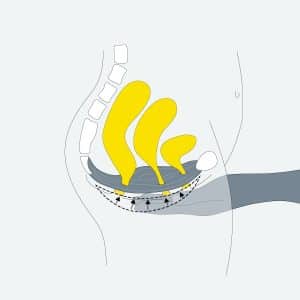
If helpful, you can support your perineum (the area between your vagina and back passage) with your hand during bowel opening. There are also tools available to facilitate easier bowel movements without using your hands. If you think you might benefit from this, you could discuss options with a healthcare professional.


An illustration of supporting the perineum (the area between your vagina and back passage) with the hand during bowel opening.

How to do pelvic floor exercises

Video: How to correctly perform pelvic floor exercises.

Additional resources on pelvic organ prolapse